
Toy Story 5 is officially confirmed, and Pixar has released the first teaser trailer revealing Woody and Buzz Lightyear returning for a new adventure in a modern, technology-driven world. For fans who grew up with these characters, the trailer feels both nostalgic and fresh. After the emotional ending of Toy Story 4, many believed Woody and Buzz had gone their separate ways forever. However, the teaser clearly shows that their story is continuing, this time facing a new challenge: children becoming more attached to digital devices than traditional toys.
As a long-time animation and storytelling fan, I’ve analyzed the official trailer, Pixar’s creative direction, and franchise history to provide a clear, trustworthy explanation of what Toy Story 5 is about, what the trailer confirms, and why this sequel still matters. Everything in this article is based on confirmed information from Pixar marketing and realistic narrative analysis, so readers can understand the film without speculation or misinformation.
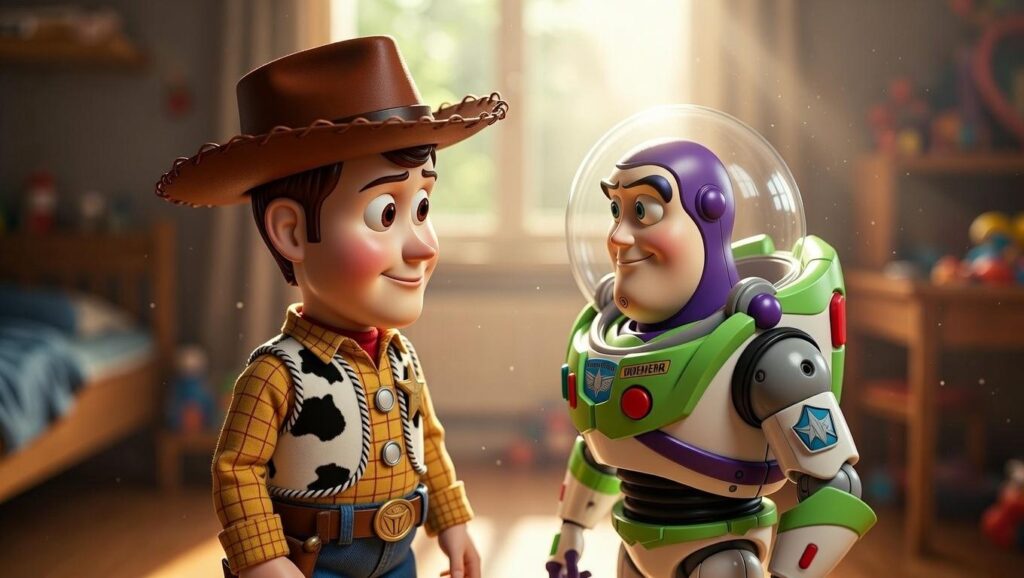
Table of Contents
What the Official Toy Story 5 Trailer Confirms
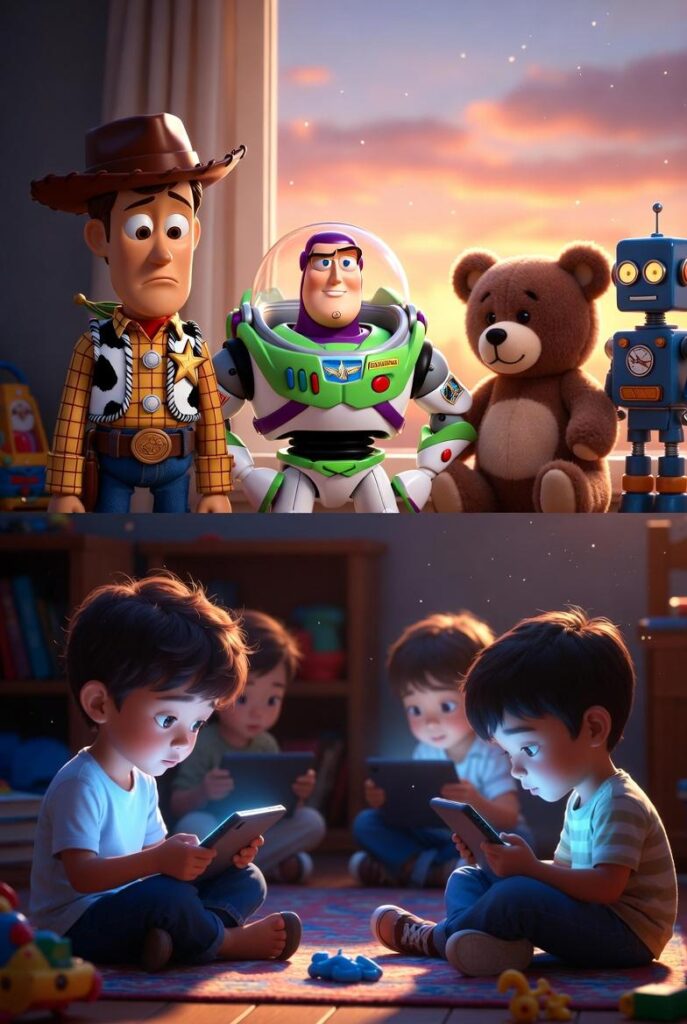
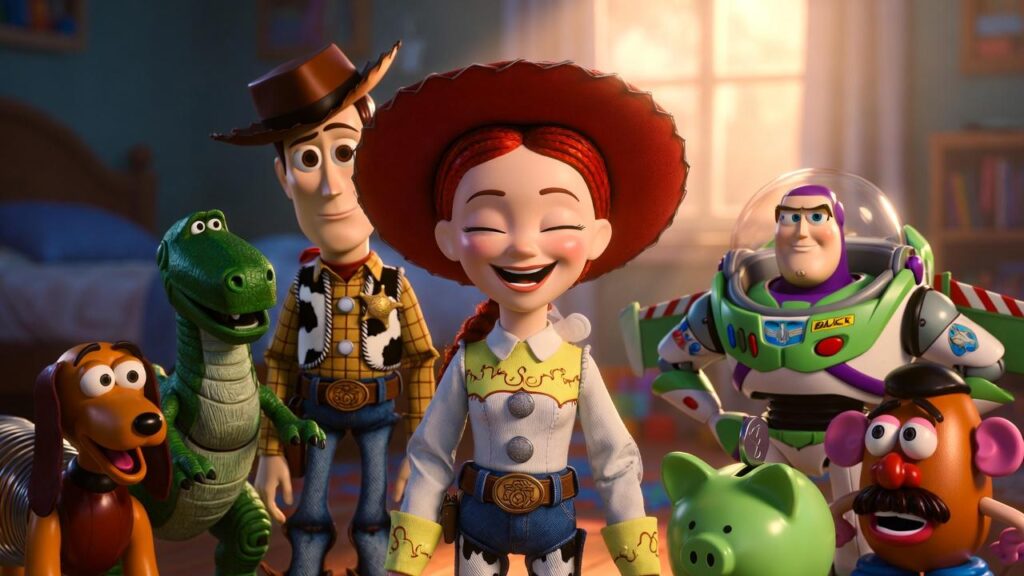
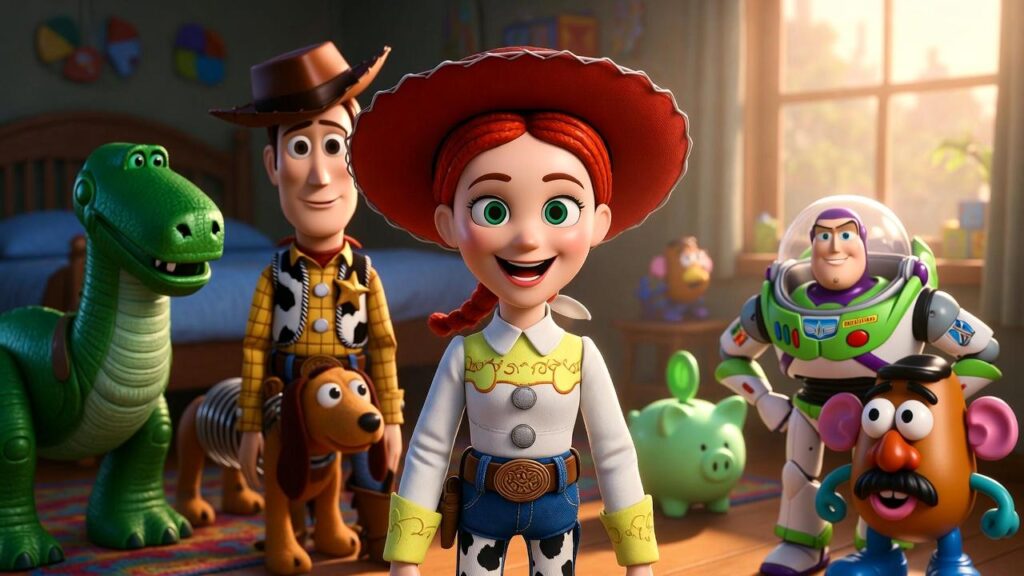
The teaser trailer confirms several important facts about Toy Story 5. First, Woody and Buzz Lightyear are both central characters again, which immediately reassures fans that the emotional core of the franchise remains intact. The trailer also shows Jessie returning alongside the original toy group, indicating that the story reconnects the classic ensemble rather than focusing only on new characters.
Most importantly, the trailer introduces the film’s main theme: toys struggling to stay relevant in a world dominated by digital entertainment. The visuals show children interacting with screens and smart devices instead of traditional toys, establishing a modern conflict that feels realistic and relatable. Pixar has always used toys as metaphors for childhood experiences, and the trailer makes it clear that the new story explores how play has evolved.
The teaser also confirms the theatrical release date of June 19, 2026, placing the film firmly in Pixar’s next major theatrical slate. This timeline matches Pixar’s typical production cycle for flagship sequels, suggesting the film is in advanced development rather than early planning.
Why Pixar Is Returning to Woody and Buzz
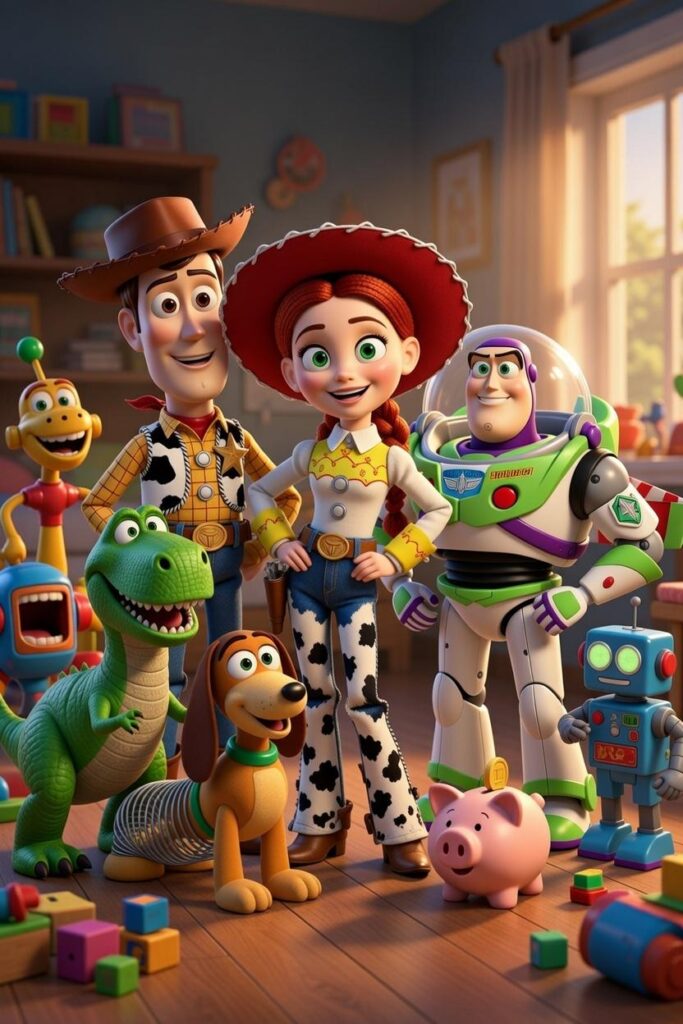
The trailer makes it clear that Pixar is not simply revisiting nostalgia but continuing an unfinished emotional journey. Toy Story 4 ended with Woody choosing independence and Buzz staying with Bonnie, creating the first real separation between the franchise’s central duo. That ending felt complete yet open, because their bond remained unresolved rather than broken.
By showing Woody and Buzz together again, the trailer suggests that the sequel explores reconnection after growth. This is consistent with Pixar’s storytelling philosophy, where relationships evolve rather than reset. The earlier films moved their relationship from rivalry to friendship to loyalty. The next stage is reunion after separate paths, reflecting mature friendships that change but endure.
This direction also preserves Woody’s independence. The trailer does not show him returning to ownership but instead interacting with Buzz as an equal. That detail is important because it respects the emotional resolution of Toy Story 4 while allowing their partnership to continue in a new form.
The New Conflict: Toys vs Technology
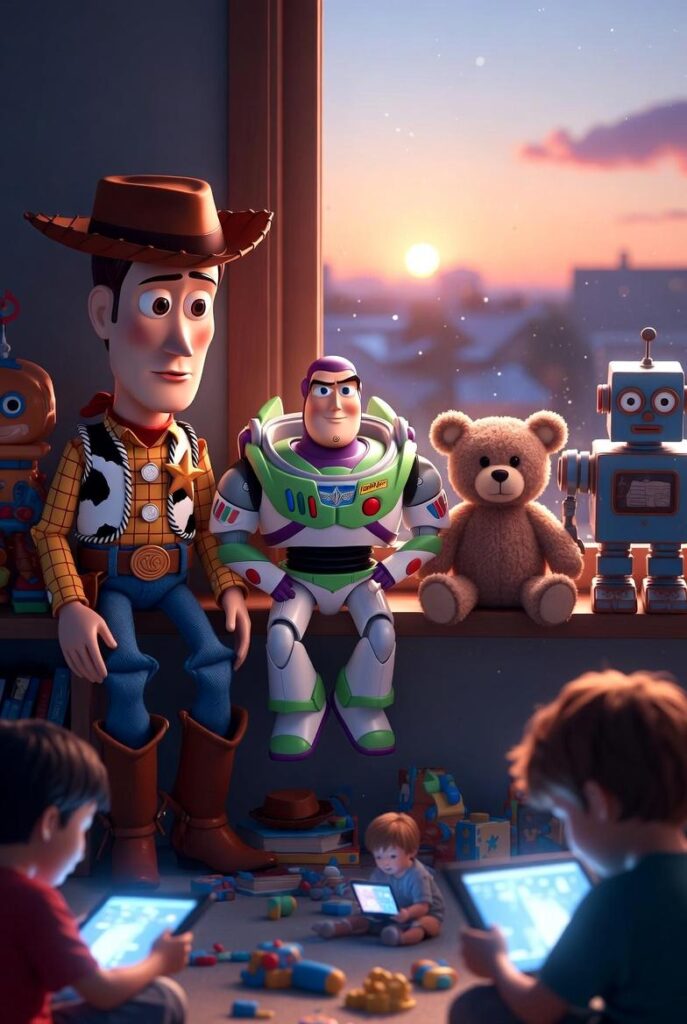
One of the most striking elements of the Toy Story 5 trailer is its focus on modern childhood technology. Scenes of children absorbed in digital devices visually contrast with toys waiting unused. This establishes the sequel’s central question: what happens when toys are no longer the primary focus of play?
This theme feels especially relevant today. Children increasingly form attachments to digital characters, games, and virtual environments rather than physical toys. Pixar appears to be exploring whether imagination itself is changing or simply shifting medium. Earlier Toy Story films addressed jealousy, abandonment, and growing up. The new film appears to address relevance in a digital age.
The trailer suggests that toys must adapt rather than disappear. This message aligns with Pixar’s long-standing theme that the emotional value of play matters more than the object itself. Whether a child loves a cowboy doll or a digital avatar, the connection is still real. By presenting toys facing technological change, the film can explore continuity rather than conflict between old and new forms of play.
Woody’s Role After Toy Story 4
The trailer indicates that Woody continues his life beyond ownership, interacting with other toys rather than belonging to a single child. This reflects his decision in Toy Story 4 to help lost toys find purpose. Instead of reversing that choice, Toy Story 5 appears to expand it. Woody now operates in a broader toy world, not confined to one home or owner.
This evolution makes him uniquely suited to confront the new crisis. If toys are losing relevance, Woody represents adaptation and meaning beyond ownership. His experience helping abandoned toys positions him as a guide figure, someone who understands purpose even without being played with. This role naturally complements Buzz, who remains connected to a child’s world. Together, they represent two sides of toy identity: belonging and independence.
Buzz Lightyear’s Continuing Journey
The trailer also reinforces that Buzz Lightyear remains central to the story. His arc across the franchise has always involved identity and mission. In earlier films, he struggled between believing he was a real space ranger and accepting he was a toy. Later, he learned to follow instinct rather than programmed commands. Now, the new conflict challenges his sense of purpose again.
If children are turning away from toys, Buzz’s role as a protector of play becomes uncertain. The trailer hints at concern among the toys, suggesting Buzz may again question what it means to matter to a child. This theme connects directly to his history, making the sequel feel like progression rather than repetition. Reuniting with Woody allows both characters to navigate change together, reinforcing their partnership at a deeper level.
Jessie and the Original Toy Group Return
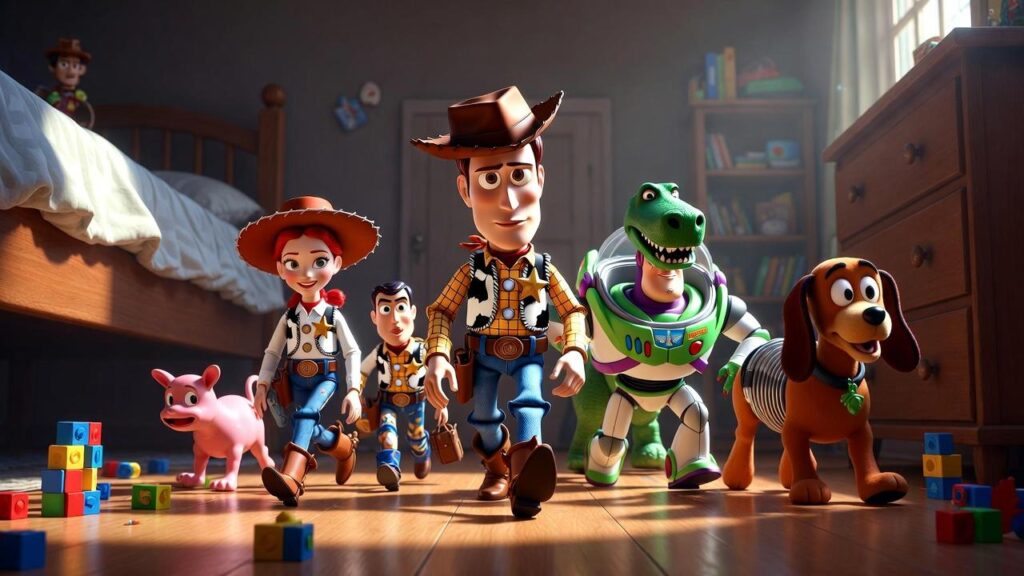
Another important confirmation from the trailer is the return of Jessie and the original toy ensemble. Their presence signals that Toy Story 5 is not abandoning the classic group dynamic. Jessie, in particular, bridges Woody’s past and Buzz’s present. Having remained with Bonnie, she represents continuity with the child-toy relationship while still sharing Woody’s history.
Seeing the group together again also reinforces the emotional continuity of the franchise. These characters have accompanied audiences for decades, and their interactions carry generational familiarity. Pixar appears to recognize that the strength of Toy Story lies not only in Woody and Buzz but in the ensemble relationships that surround them.
How Toy Story 5 Reflects Modern Childhood
The trailer’s technology theme connects strongly with real changes in childhood behavior. Today’s children often interact with stories and characters through screens rather than physical toys. Games, apps, and digital media provide imaginative engagement that earlier generations found through tangible objects. This shift does not eliminate imagination but changes how it is expressed.
By portraying toys confronting this shift, Toy Story 5 can explore whether emotional attachment to play objects still exists in a digital world. Pixar’s message has always been that connection, not material form, defines a toy’s meaning. Showing toys confronting obsolescence allows the film to reaffirm that imagination evolves rather than disappears.
This theme also resonates with audiences who grew up during the transition from physical toys to digital entertainment. Many viewers experienced both action figures and video games as meaningful childhood companions. The film’s exploration of this transition, therefore, speaks across generations rather than targeting only children.
Why the Trailer Suggests a Reunion Story
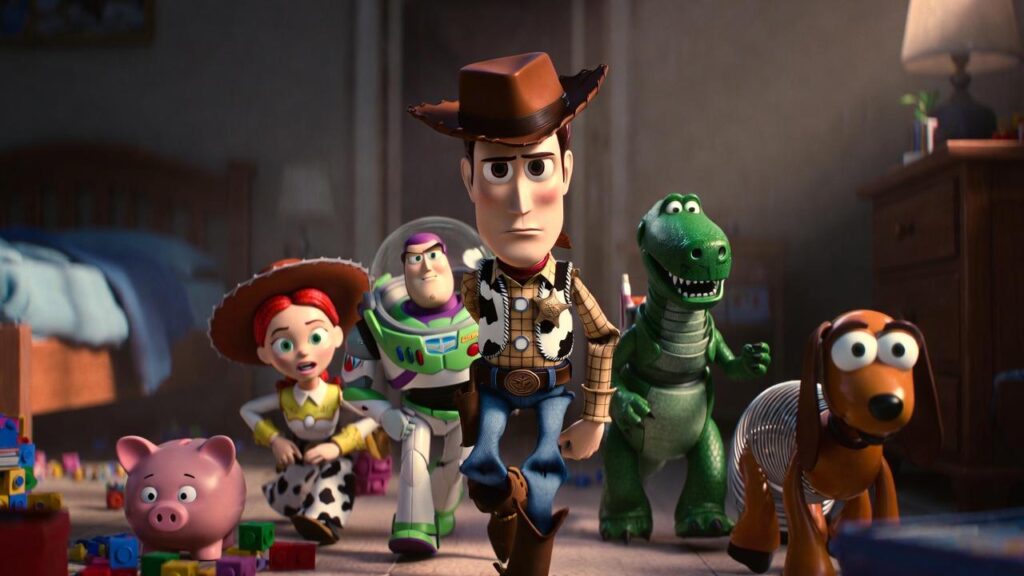
Although the teaser does not reveal full plot details, its imagery strongly suggests a reunion-driven narrative. Showing Woody and Buzz together again implies that their separation was temporary rather than final. Pixar typically uses reunions to explore how characters have changed rather than restoring old dynamics unchanged.
A reunion after separate growth allows both characters to bring new perspectives. Woody represents purpose beyond ownership, while Buzz represents loyalty within ownership. Facing technological change together allows their differences to complement each other. This structure maintains continuity while enabling new emotional development, which is consistent with Pixar’s approach to sequels.
Release Date and Production Status
The official trailer confirms that Toy Story 5 will release in theaters on June 19, 2026. This date places the film among Pixar’s major theatrical releases and indicates that production is well advanced. Animated films of this scale require several years of development, including storyboarding, voice recording, animation, and rendering. The presence of a teaser trailer typically signals that core story direction and visual design are established.
For audiences, the confirmed release date provides clarity that the sequel is not speculative but actively scheduled. This also allows marketing and audience anticipation to build gradually, which Pixar has historically done for flagship titles.
Why Toy Story 5 Still Matters
The trailer demonstrates that Toy Story 5 is not merely revisiting beloved characters but addressing how childhood itself has changed. Woody and Buzz began as symbols of traditional toy play in the 1990s. By placing them in a digital-era context, Pixar allows the franchise to evolve alongside its audience. This continuity is rare in long-running animated series, where characters often remain static.
For longtime fans, seeing Woody and Buzz together again confirms that their relationship remains the heart of the saga. For new audiences, the technology theme introduces contemporary relevance. Balancing nostalgia with modern themes allows the franchise to remain meaningful rather than repetitive.
Final Thoughts: What the Toy Story 5 Trailer Tells Us
Toy Story 5 continues Pixar’s most iconic story by asking a new question: Do toys still matter in a digital age? The trailer confirms that Woody and Buzz Lightyear return not just for nostalgia but to confront a changing world of play. Instead of repeating earlier themes, the sequel appears to explore relevance, adaptation, and enduring friendship.
For audiences who have grown up with these characters, the reunion feels earned rather than forced. Woody’s independence and Buzz’s loyalty remain intact, but their partnership evolves to face a modern challenge. If the final film expands on the ideas introduced in the trailer, Toy Story 5 has the potential to extend the franchise’s legacy while remaining emotionally authentic.
That is why, even after decades, the return of Woody and Buzz still feels meaningful: their story continues to grow alongside the world and the viewers around them.
Is the Toy Story 5 trailer official?
Yes. Pixar has released an official teaser trailer confirming Woody, Buzz Lightyear, and Jessie returning.
What is Toy Story 5 about?
The trailer shows toys facing a modern world where children are more focused on digital devices, exploring relevance, and changing play
Will Woody and Buzz reunite?
Yes. The teaser clearly shows them together again, confirming their partnership continues.
When will Toy Story 5 be released?
The official theatrical release date is June 19, 2026.
Does Toy Story 5 continue after Toy Story 4?
Yes. The film continues the story after Woody chose independence and Buzz remained with Bonnie.
Are the original toys returning?
Yes. The trailer shows Jessie and the classic toy group alongside Woody and Buzz.