
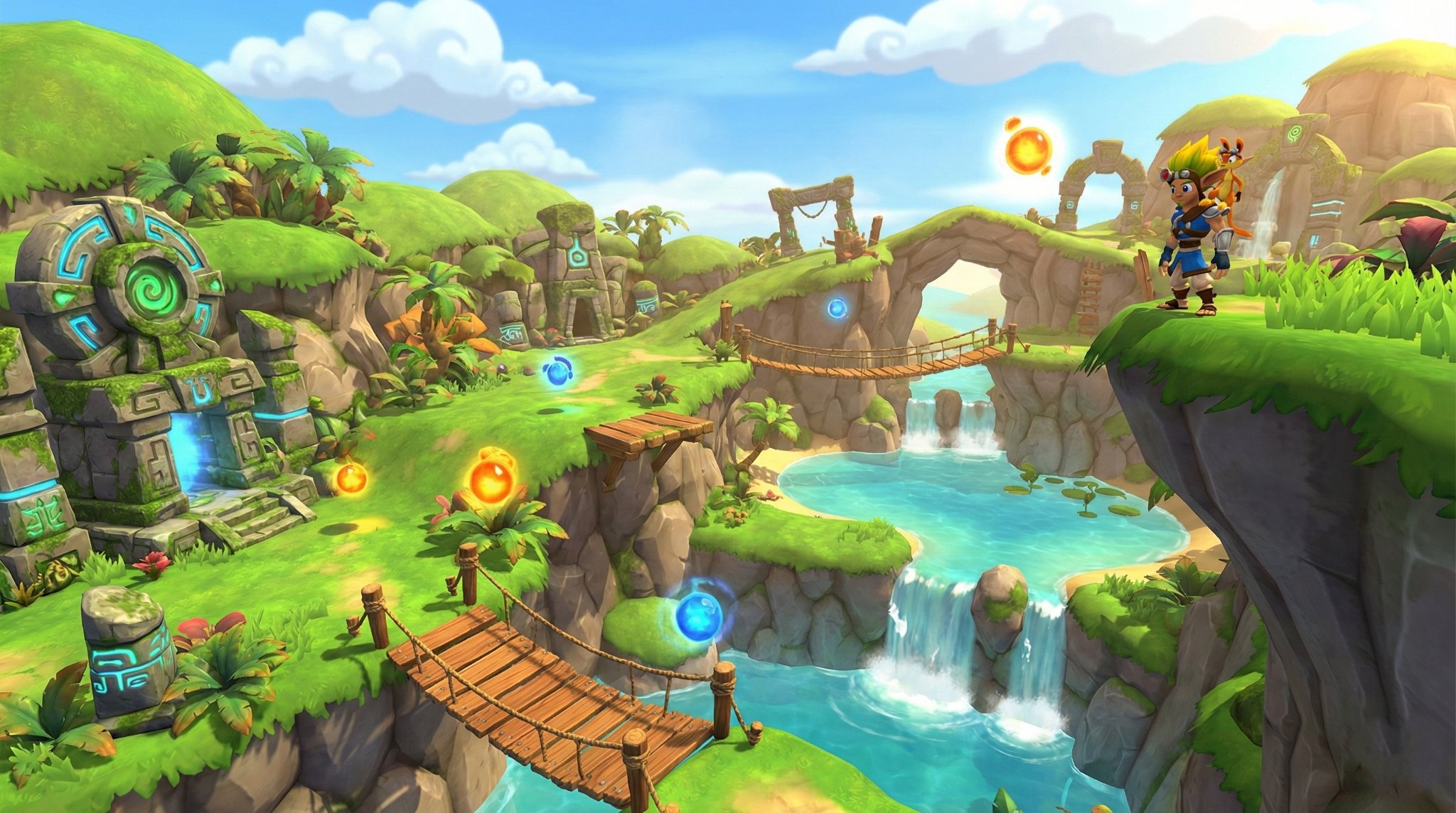
Jak and Daxter: The Precursor Legacy is one of the most important 3D platformer games ever made, and even today, many players return to it or discover it for the first time on modern PlayStation systems. Originally released in 2001 by Naughty Dog for the PlayStation 2, the game helped define open-world platforming before that term was even common. With its seamless world, fluid movement, and collectible-driven exploration, it became a landmark title in PlayStation history.
Over the years, the game has been re-released on multiple PlayStation platforms, including PlayStation 3, PlayStation 4, and is now playable on PlayStation 5 through backward compatibility and the PlayStation Classics catalog. Because of this continued availability, interest in Jak and Daxter PS5 versions has grown again among both nostalgic fans and new players.
This guide explains what makes Jak and Daxter: The Precursor Legacy special, how it plays today on PS5, and why it remains one of the most polished platformers ever created.
Table of Contents
Jak and Daxter: The Precursor Legacy – What the Game Is
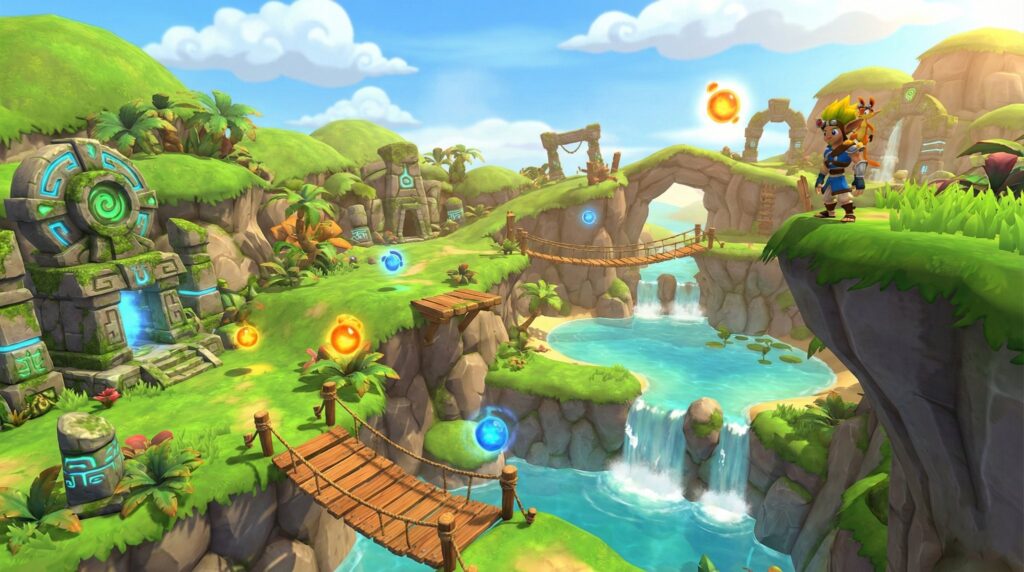
Jak and Daxter: The Precursor Legacy is a third-person platform adventure game in which players explore a connected world to collect Power Cells and Precursor Orbs while unlocking new areas. Unlike many platformers of its era, the game does not use separate levels or loading screens between regions. The entire world is connected, which was technically impressive in 2001.
Players control Jak, a silent hero, alongside his companion Daxter, who provides humor and story commentary. The core gameplay involves platforming, combat against creatures called Lurkers, puzzle solving, and exploration of villages and environments.
The design philosophy focused on freedom of movement and smooth animation. Naughty Dog used a custom engine that allowed streaming world transitions without loading interruptions, which made the game feel immersive and ahead of its time.
Jak and Daxter: The Precursor Legacy Gameplay and Mechanics
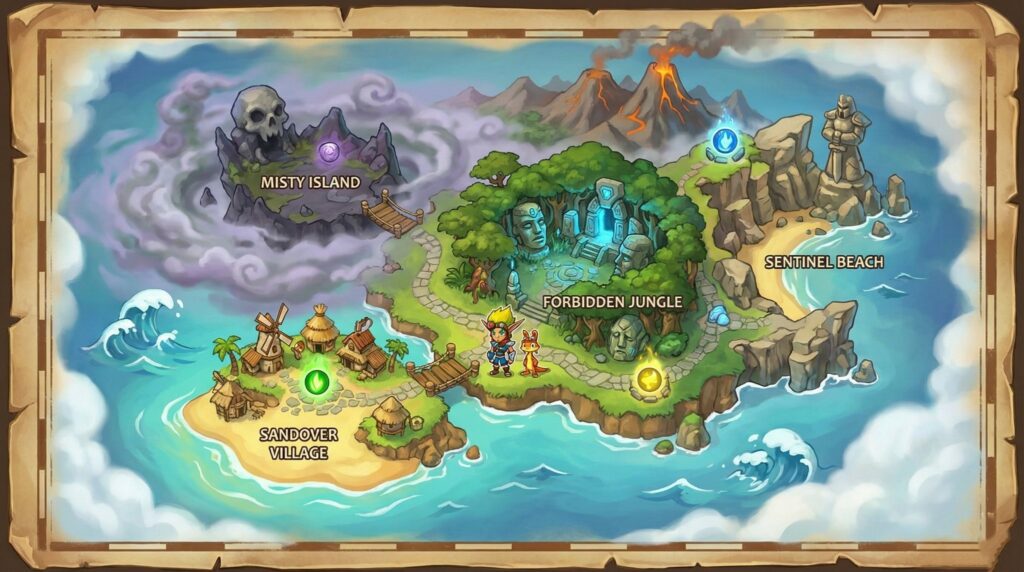
The gameplay of Jak and Daxter: The Precursor Legacy is built around exploration and collection rather than strict linear progression. Players travel between regions such as Sandover Village, Forbidden Jungle, Misty Island, and Snowy Mountain. Each area contains Power Cells needed to unlock further travel and story progress.
Movement is fluid and responsive. Jak can run, jump, double jump, spin attack, dive, and roll, all of which connect smoothly. This movement system later influenced many action-platformer games.
Combat is simple but effective. Jak uses melee attacks and environmental interactions to defeat enemies. The challenge comes more from navigation and timing than complex fighting mechanics.
Collectibles play a central role. Power Cells act as main progression keys, while Precursor Orbs are optional collectibles used for trades and completion. Scout Flies serve as sub-objectives that reward additional Power Cells when collected fully in an area.
The balance between exploration, platforming, and collection creates a gameplay loop that remains satisfying even decades later.
Why Jak and Daxter: The Precursor Legacy Was Technically Revolutionary
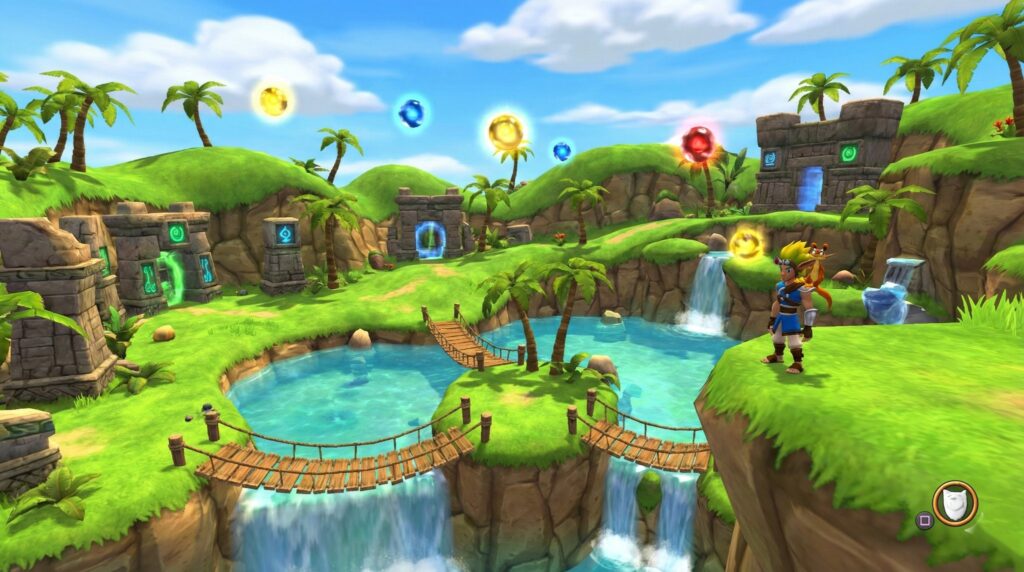
In 2001, most 3D platformers used separate levels with loading screens. Jak and Daxter: The Precursor Legacy removed this structure by creating a continuous world. This meant players could travel between regions without interruption.
The game engine streamed environment data dynamically from the PlayStation 2 hardware. This allowed seamless transitions while maintaining stable performance. At the time, this was a major technical achievement.
The animation system also set new standards. Jak’s movement blends actions smoothly, making traversal feel natural rather than segmented. This fluidity is still praised in modern game design discussions.
These innovations influenced later open-world and platform games, including Naughty Dog’s own Uncharted series.
Jak and Daxter Story and World
The story follows Jak and Daxter after Daxter is transformed into an ottsel during an accident involving Dark Eco. The two heroes travel across regions seeking a way to reverse the transformation while uncovering ancient Precursor technology.
The world combines fantasy, nature, and ancient ruins. Environments range from beaches and jungles to snowy mountains and lava caves. Each region introduces unique traversal challenges and enemies.
The tone balances adventure and humor. Daxter provides comic relief, while Jak’s silent presence emphasizes action and exploration.
Jak and Daxter PS5 Version and Modern Playability
Today, Jak and Daxter: The Precursor Legacy can be played on PlayStation 5 through the PlayStation Classics catalog or backward compatibility versions originally released for PS4. These versions preserve the original gameplay while running smoothly on modern hardware.
On PS5, the game benefits from stable performance and fast loading through system emulation improvements. The core experience remains identical to the original PS2 version, which is intentional to preserve authenticity.
This means modern players experience the same mechanics and design that defined the original game, rather than a remake with altered systems.
Why Jak and Daxter: The Precursor Legacy Still Holds Up
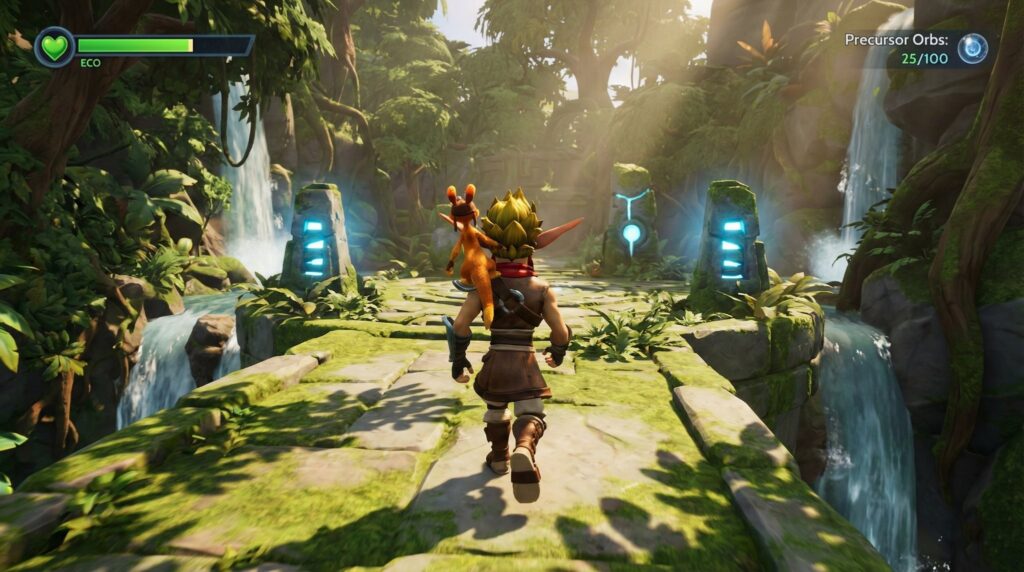
Many early 3D platformers feel outdated due to stiff controls or camera issues. Jak and Daxter: The Precursor Legacy avoids this problem because of its advanced movement design. Controls remain responsive and natural even today.
The seamless world also prevents the fragmentation common in older games. Exploration feels continuous rather than segmented. This design aligns closely with modern open-world expectations.
Visual style also ages well. Instead of realistic graphics, the game uses stylized environments and characters. Stylization often preserves visual appeal longer than realism.
Because of these factors, the game remains enjoyable for new players, not only nostalgic fans.
Collectibles and Completion in Jak and Daxter
Completion in Jak and Daxter: The Precursor Legacy involves collecting all Power Cells, Precursor Orbs, and Scout Flies. Full completion unlocks additional content and represents mastery of exploration challenges.
The game encourages thorough exploration without forcing it. Players can finish the story without full completion but are rewarded for deeper engagement.
This optional completion structure influenced many later platform games.
Influence on the Jak and Daxter Series
Jak and Daxter: The Precursor Legacy established the foundation for later titles in the series. Sequels shifted toward a darker tone and combat-focused gameplay, but the original remains a pure platforming experience.
Its success also contributed to Naughty Dog’s evolution toward cinematic storytelling, seen in later franchises.
Final Thoughts on Jak and Daxter: The Precursor Legacy
Jak and Daxter: The Precursor Legacy remains one of the most polished and influential platformers ever created. Its seamless world, fluid movement, and exploration-driven design set standards that many later games followed. Even decades later, the PS5 version allows new players to experience the original vision without compromise.
For anyone interested in classic platforming, PlayStation history, or game design evolution, Jak and Daxter: The Precursor Legacy remains essential. Its quality comes not from nostalgia but from strong design fundamentals that continue to work today.
What is Jak and Daxter: The Precursor Legacy?
It is a 3D platform adventure released in 2001 by Naughty Dog for PlayStation 2.
Can you play Jak and Daxter on PS5?
Yes. It is available through PlayStation Classics and backward compatibility.
Is Jak and Daxter an open world?
It uses a seamless connected world without loading screens between regions.
How long is Jak and Daxter: The Precursor Legacy?
The main story takes about 8–10 hours; full completion takes longer.
Is Jak and Daxter still worth playing?
Yes. Its movement, world design, and exploration remain strong today
Who developed Jak and Daxter?
Naughty Dog developed and Sony published it.